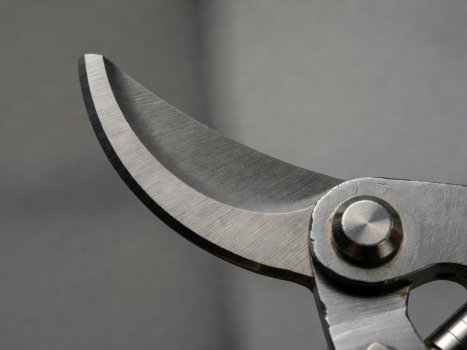
The Core Mechanics: Bypass vs. Anvil
When selecting a pair of hand pruners, the primary decision revolves around the blade action. The market is predominantly split into two categories: bypass and anvil secateurs. Each serves a distinct botanical purpose, and using the wrong type can severely damage your plants and invite disease.
Bypass Secateurs
Bypass pruners operate exactly like a pair of scissors. A single sharpened blade sweeps closely past a curved, unsharpened lower jaw (the hook). This slicing motion delivers a clean, precise cut. The primary advantage of a bypass action is that it minimizes tissue crushing on the part of the plant left behind.
These are best suited for cutting live, green stems and branches. The clean wound they leave heals quickly, defending the plant against fungal infections and pest ingress. When choosing bypass pruners, look for a tight tolerance between the two blades; if there is a gap, the tool will tear rather than cut the plant fiber.
Anvil Secateurs
Anvil pruners feature a single straight blade that closes against a flat lower plate (the anvil), usually made of a softer metal like brass or an industrial plastic. This action crushes the stem as it cuts, similar to a knife chopping onto a cutting board.
Because of this crushing action, anvil secateurs should rarely be used on live, green wood. However, they excel at clearing deadwood and thicker, brittle branches where a bypass pruner might twist and sustain damage. The wider jaw opening and central force distribution make them exceptional for heavy-duty, destructive pruning.
Material Matters: Carbon Steel vs. Stainless Steel
The longevity and cutting efficiency of your secateurs largely depend on the blade material. The two most common options are high-carbon steel and stainless steel, each presenting distinct trade-offs.
- High-Carbon Steel: Renowned for its ability to take and hold an exceptionally sharp edge. These blades can slice through tough wood with less effort. The trade-off is their susceptibility to rust. Carbon steel requires diligent maintenance, including regular cleaning, drying, and oiling after each use.
- Stainless Steel: Highly resistant to rust and corrosion, making these pruners virtually maintenance-free in terms of cleaning. However, stainless steel is a softer alloy. It will lose its edge more rapidly than carbon steel and may struggle with thicker, hardwood stems.
Ergonomics and Hand Strain
Pruning is highly repetitive and can quickly lead to fatigue or repetitive strain injury (RSI). Advanced ergonomic designs have become a standard in premium tools to combat this.
Rotating Handles: Some high-end models feature a rotating lower handle that rolls with your fingers as you squeeze. This distributes the pressure across all digits and reduces the friction that causes blisters, decreasing hand fatigue by up to 30% over long sessions.
Sizing: One size does not fit all. Leading manufacturers produce secateurs in small, medium, and large configurations. A tool that opens too widely for your grip will quickly cause thumb base pain. Always check the overall length and max opening width specifications before purchasing.
Essential Maintenance Practices
To ensure your secateurs last a lifetime, establish a strict maintenance routine:
- Cleaning: Wipe away sap and debris with a cloth. For stubborn sap, use a specialized sap solvent or warm soapy water.
- Disinfection: Between cutting different plants, especially diseased ones, wipe the blades with rubbing alcohol to prevent pathogen spread.
- Sharpening: Use a diamond file or whetstone specifically designed for pruners. Only sharpen the outer bevel of a bypass blade; the flat inner side must remain perfectly flush with the hook.
- Lubrication: Apply a few drops of light machine oil to the central pivot gear and a thin film over carbon steel blades before storing.