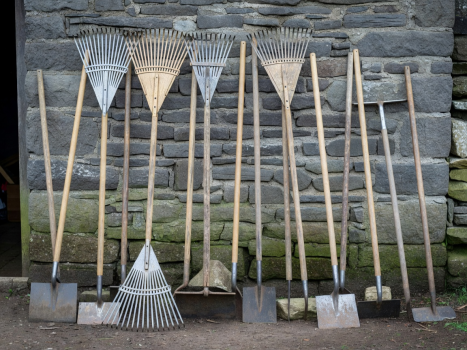
The Art of Weeding and Cultivation
While heavy digging tools restructure the earth, rakes and hoes refine it. These long-handled implements are designed for surface-level work: removing weeds without disturbing the deeper soil structure, aerating the topsoil to improve water absorption, and grading the earth to a fine tilth for seed sowing.
Deconstructing the Hoe
Hoes generally fall into two operational categories: push-pull action and chopping action. Choosing the right one determines your efficiency and physical exertion levels when maintaining beds.
The Dutch Hoe
The Dutch hoe (or push hoe) features a gently angled blade with a forward-facing cutting edge. It is designed to be pushed and pulled just below the soil surface, slicing through the roots of weeds while keeping the gardener in a relatively upright, comfortable standing position. The open-center design of many Dutch hoes allows soil to flow over the blade, reducing resistance. This is an essential tool for maintaining large borders and vegetable patches where weeds are still young and shallow-rooted.
The Draw Hoe
Contrasting the Dutch hoe, the draw hoe features a blade set at a right angle (90 degrees) to the shaft. It is used in a chopping and pulling motion toward the user. This aggressive action is superior for dealing with established, deep-rooted weeds, breaking up heavy clods of soil, or drawing up earth to hill potatoes and leeks. Because of the chopping motion, draw hoes require more physical effort and a slightly stooped posture compared to push hoes.
Categorizing Rakes
A rake is not just a rake. Using a leaf rake to level soil will destroy the tool, while using a soil rake on a lawn will damage the grass.
The Soil Rake (Bow Rake)
Soil rakes feature short, rigid metal tines (teeth) attached to a flat head. In a bow rake, the head is attached to the shaft by two curved metal supports that resemble a bow. This design acts as a shock absorber when the rigid tines strike hidden rocks. These rakes are heavy and unyielding, designed specifically for grading topsoil, spreading gravel, and breaking up surface clods into a fine, crumbly texture suitable for seedbeds.
The Leaf Rake (Lawn Rake)
Leaf rakes have long, flexible tines arranged in a fan shape. Historically made of bamboo, modern iterations use spring steel or high-density plastics. Their primary purpose is to gather light, loose debris like fallen leaves or grass clippings without digging into the underlying soil or tearing the grass roots. Spring steel tines offer the best longevity and elasticity, allowing the rake to conform to uneven ground profiles effortlessly.
Ergonomics of Long-Handled Tools
When selecting any rake or hoe, the length of the shaft is critical. A tool that is too short forces the user to hunch over, leading directly to lower back pain. Ideally, when holding a hoe or rake, your back should remain straight. Look for tools with shafts between 54 and 60 inches long, or opt for interchangeable handle systems that allow you to select a shaft length perfectly calibrated to your height.